


Black Jebena
Ethiopia Guji Shakisso Hadeso Gr. 1 Washed Organic Coffee
Ethiopia Guji Shakisso Hadeso Gr. 1 Washed Organic Coffee
Café etíope Guji Shakisso Hadeso Lavado Orgánico G1 con notas de mandarina, nectarina, jazmín, bergamota y Aaúcar de caña. Tostado artesanalmente en Sevilla.
- Small local business
- 100% traceability of origin
- Receive it in 2-3 business days*
* All shipments take 2-3 business days to the peninsula (except for espresso machines and merchandise, which take 5-10 days).
Couldn't load pickup availability
Sobre este producto...
Sobre este producto...
Guji Shakisso Hadeso Washed Organic G1 – Ethiopia Coffee
A juicy, clean, and bright coffee that showcases Guji's most expressive character. Sourced from Oddoo Shakisso, in the Guji coffee region, and processed using the washed method at the Hadeso station, it offers a balanced, aromatic, and fresh cup.
Cultivated by small-scale farmers at altitudes between 1,850 and 2,100 meters, this Grade 1 coffee reflects Guji's unique identity: defined profiles, vibrant acidity, and great aromatic complexity.
• 100% Arabica coffee from Ethiopia
• Guji Shakisso Hadeso Washed Organic G1 Lot
• Organic certified
• Freshly craft roasted in Seville
• Available in whole bean or ground
• Available in various formats
Tasting Notes
🌼 Jasmine
🍊 Tangerine
🍑 Nectarine
🍋 Bergamot
🍬 Cane Sugar
Cup Profile
Profile: Juicy · Citrus · Floral · Clean
Acidity: Medium-high and bright
Body: Medium
Sweetness: Medium-high
Roast: Specialty
Origin
- Country: Ethiopia
- Region: Guji
- Area: Oddoo Shakisso / Dambi Uddo
- Washing Station: Guji Hadeso
- Altitude: 1,850 – 2,100 masl
- Varieties: JARC varieties and local landraces
- Process: Washed (Fully Washed)
- Quality: Grade 1
- Certification: Organic
- Lot: Guji Shakisso Hadeso Gr. 1 Fully Washed Organic
What to expect in the cup?
If you are looking for a clean, juicy Ethiopian coffee with vibrant acidity, this Guji Shakisso Hadeso is an excellent choice. Its profile combines citrus acidity reminiscent of mandarin with sweet and fruity notes, creating a balanced, fresh, and very aromatic cup.
Unlike natural coffees, which are more intense and fruity, the washed process allows for a clearer appreciation of the origin's elegance and Guji's inherent complexity.
Recommended methods
✓ V60
✓ Chemex
✓ AeroPress
✓ Filter coffee maker
✓ Smooth and aromatic Espresso
The story behind this coffee
Hadeso: a washing station in the heart of Guji
This coffee comes from the Guji Hadeso washing station, located in the Oddoo Shakisso area, within the Guji coffee region.
Around 500 small-scale farmers deliver their coffee cherries here. Most cultivate small family plots, where work is still mainly manual, and coffee is produced following traditional methods.
Guji is one of Ethiopia's most renowned regions for the quality and personality of its coffees. Although for years its coffees were blended under the Sidamo designation, today Guji is recognized as an area with its own identity, thanks to its local varieties, microclimates, and characteristic cup profiles.
Every cup represents the work of hundreds of coffee farming families who have cultivated coffee for generations in one of Ethiopia's most special regions.
Traditional and organic cultivation
Guji farmers often grow coffee alongside other foods, a common practice among small-scale farmers that allows for better land utilization and family sustenance.
Many farms are traditionally and organically managed by nature, with very little or no use of fertilizers or pesticides. Field work, harvesting, and much of the processing are done manually.
This lot also has organic certification, reinforcing its connection to a cultivation method that respects the environment and local practices.
From tree to cup
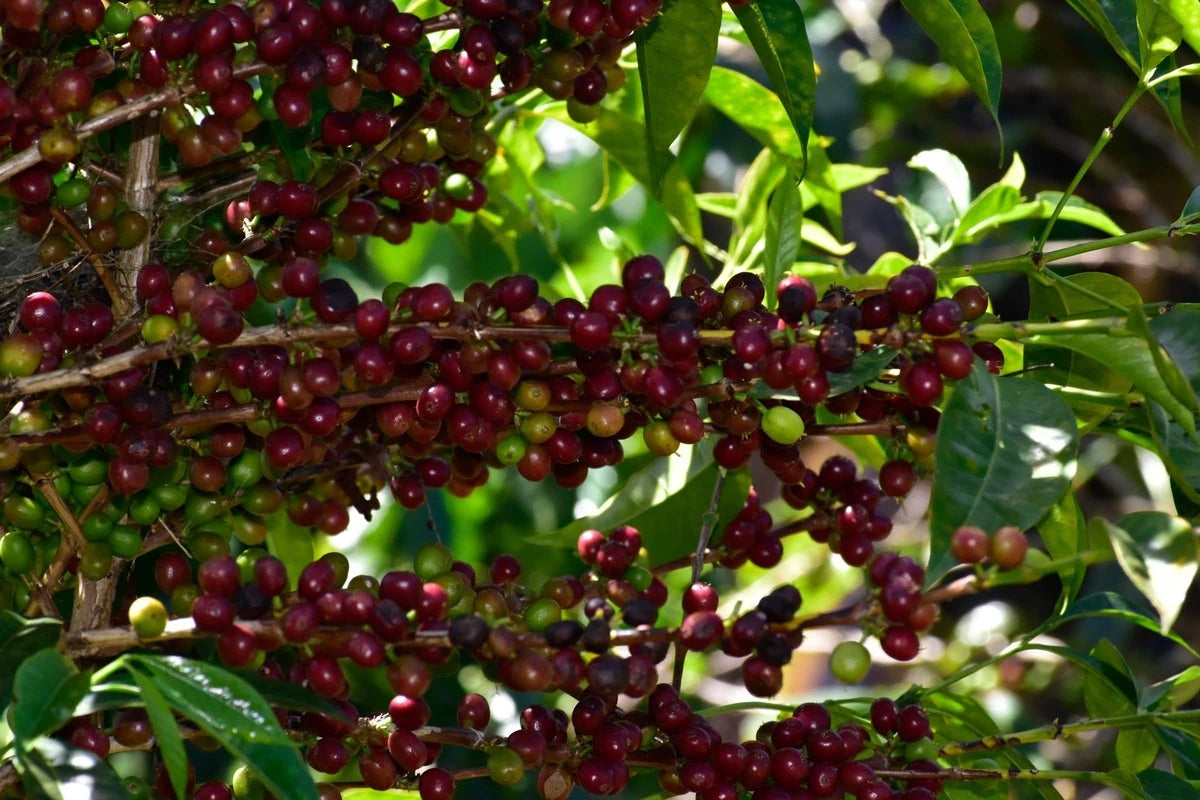
Cherries are hand-picked when they reach optimal ripeness and delivered to the Guji Hadeso station.
Once there, they are carefully selected to remove damaged or unripe cherries. They are then depulped, usually within hours of harvest, to prevent unwanted fermentation.
The coffee ferments in tanks for 36 to 48 hours. During this process, the water is changed frequently. Once fermentation is complete, the parchment is thoroughly washed and sorted in water channels until the mucilage is completely removed.
Afterward, the coffee is dried on raised beds under shade cloth for several days until it reaches the appropriate moisture level. During drying, it is stirred and manually sorted several times to remove any damaged or discolored beans.
This care in processing helps create a clean, juicy, and balanced cup.
Ethiopia: where coffee was born
Ethiopia is considered the birthplace of coffee and remains one of the most fascinating origins in the world.
Its extraordinary genetic diversity, traditional cultivation methods, and centuries of coffee culture result in some of the most complex and appreciated profiles in specialty coffee.
Most Ethiopian coffee continues to be cultivated traditionally, with very little use of fertilizers or pesticides and a strong reliance on manual labor in all production phases.
Who is this coffee for?
✓ For those who enjoy clean, juicy, and aromatic coffees
✓ For those seeking citrus acidity and balanced fruity notes
✓ For filter methods such as V60, Chemex, or AeroPress
✓ For those who want to discover Guji's unique personality
✓ For those looking for a high-quality organic Ethiopian coffee
About Black Jebena
At Black Jebena, we work exclusively with coffees from Ethiopia, the birthplace of coffee. We craft roast in Seville in small batches to respect the identity of each origin and bring our customers the rich cultural and gastronomic heritage of the country where coffee was born.
Who are you buying from?
Who are you buying from?
We are a unique roastery in Spain, founded in Seville by Ethiopian Abezash Tamerat and Gonzalo Guajardo. We specialize in Ethiopian coffee, roasting in micro-lots with in-depth knowledge of the origin and suppliers.
By choosing us, you're supporting a local, independent, neighborhood store and authentic, natural, and traceable coffee.
Reviews
Reviews
To date, 100% of our Google reviews are 5-star. Remember, we work with premium (grade 1) coffee and roast it in small batches. Read what people say about our coffee here: https://maps.app.goo.gl/W3uWRCeXtqKrEiqZ9
Devolución sin riesgo
Devolución sin riesgo
Si no has abierto el café, dispones, no de 14 (como marca la ley) sino de 30 días para devolverlo. Sin excusas. Ese café no se comercializa, lo consumiremos nosotros.
Si ya lo has abierto y no era lo que esperabas, escríbenos. Buscaremos contigo la mejor solución posible en cada caso: cambio, reembolso parcial o devolución.
Un dato: hasta la fecha, nadie nos ha pedido devolver un solo café. ¡Será por algo! ;-)
About shipments
About shipments
We offer free shipping* in these cases:
- In Spain (Peninsula and Balearic Islands) + €50 / Delivery 2-3 business days (except espresso machines, which take 5-10 business days).
- EU: + €100 / Delivery 5-10 business days
In all other cases, a shipping fee will be applied based on the size of the item.
*This does not apply to merchandising products (clothing and accessories), which take 5-10 days and have fixed shipping costs.
* Due to complicated logistics and customs duties, we currently only ship to the peninsula, the Balearic Islands, and the rest of the EU (we are not able to ship orders to the following destinations: the Canary Islands, Ceuta, and Melilla). We are deeply sorry for any inconvenience this may cause.
More information:
- All shipments have a tracking number.
- We meet deadlines in 95% of cases, depending on the operations of our logistics partners.
- Weekends and holidays do not count as delivery days.
Easy and secure payment
Easy and secure payment
Our secure Shopify payment platform, used by millions of users daily, accepts:
- VISA, Mastercard, American Express cards .
- Apple Pay
- Google Pay
- Shop Pay
- Klarna (split payment)
- Payment in store
- Bizum
At your service
At your service
We're here to answer your questions and help you with anything you need. You can write to us at info@blackjebena.com or WhatsApp us at +34 604 171 211 and we'll be happy to assist you during store opening hours. Let us guide you!


Reseñas que enamoran
Referentes mundiales que ya lo han probado
Mira a los referentes del mundo del café actual.

Kat Melheim
Roasterkat (Kat Melheim) es una reconocida profesional, educadora y creadora de contenido en el mundo del café de especialidad. Es tostadora, barista, escritora y figura destacada en la comunidad cafetera global.

Kim Ossemblog
Kim Ossenblok es educador, autor y consultor internacional de café. Fundador de Estudio de Café Online —la mayor plataforma de formación de café en español

Jack Simpson
Jack Simpson Es un barista profesional australiano, miembro de Axil Coffee Roasters en Melbourne, quien se coronó como Campeón Mundial de Barismo en el World Barista Championship celebrado en Milán. Es conocido por sus innovadoras mezclas de café.
Tus preguntas, resueltas.
¿Cuál es el mejor café en grano?
El mejor café en grano es aquel que ha sido cultivado, procesado y tostado con cuidado, respetando las características de su origen. Los cafés arábica de especialidad. como el etíope, destacan por su complejidad aromática, dulzor y equilibrio.
¿Qué diferencia hay entre un café comercial y un café de especialidad?
El café de especialidad procede de granos seleccionados con menos defectos, mayor trazabilidad y una puntuación de calidad superior. En Etiopía se recolecta en alta montaña a mano. Además, debe tostarse en pequeños lotes para resaltar sus características naturales.
¿Por qué el café etíope es tan valorado?
Etiopía es considerada la cuna del café y alberga una enorme diversidad genética de variedades. Sus cafés suelen destacar por sus perfiles florales, afrutados y complejos, difíciles de encontrar en otros orígenes.
¿Cuánto tiempo se conserva el café fresco?
El café alcanza normalmente su mejor momento entre las 2 y las 6 semanas después del tueste. Pero puede aguantar bien hasta 3 meses. Para mantenerlo fresco, guárdalo en un lugar fresco y seco, alejado de la luz y la humedad.
¿Qué café es mejor para espresso?
Para espresso suelen funcionar muy bien cafés con buen cuerpo, dulzor y equilibrio. La elección dependerá de si prefieres perfiles más afrutados, florales o achocolatados. Todos nuestros cafés tienen una descripción aromática.
¿Qué café tiene más cafeína?
La variedad robusta contiene más cafeína que la arábica. Sin embargo, los cafés arábica de calidad suelen ofrecer una experiencia más compleja y agradable en taza. En Black Jebena trabajamos solo café arábica.
¿Cómo saber si un café es de buena calidad?
La fecha de tueste, la trazabilidad, el origen, la variedad y el método de procesamiento son algunos de los indicadores más importantes. Un buen café debe aportar información clara sobre su procedencia. Todos nuestros cafés llevan esa información impresa en el envase.
¿Qué significa que un café sea de origen único?
Significa que el café procede de una única región, finca o cooperativa. Esto permite apreciar mejor las características específicas del lugar donde fue cultivado.
¿Por qué Black Jebena trabaja exclusivamente con café etíope?
Porque creemos que Etiopía ofrece algunos de los cafés más fascinantes del mundo. Nuestra especialización nos permite profundizar en el origen, seleccionar mejores lotes y compartir la cultura cafetera etíope de forma auténtica.
"La sencillez del origen del café"
Por su variedad y calidad, los que saben eligen café de Etiopía.
Las claves del nuestro café Etíope.
-

Calidad de origen
Trabajamos exclusivamente con cafés etíopes seleccionados por su carácter, trazabilidad y conexión con el lugar donde nació el café. Cada región ofrece perfiles únicos que no encontrarás en ningún otro origen.
-

Selección artesanal
Cada lote es cuidadosamente elegido y revisado antes del tueste por Abezash, que ha vivido rodeada de café en Etiopía desde su niñez. Apostamos por micro-lotes y cafés de temporada que expresan la identidad de cada cosecha.
-

Tostado en microlotes.
Tostamos en pequeños lotes de 1 a 5 kg para resaltar los aromas y sabores naturales del café. Sin prisas, sin producciones masivas y con la máxima frescura posible. Hacemos ediciones limitadas. Menos cantidad de café, pero de mayor calidad.


