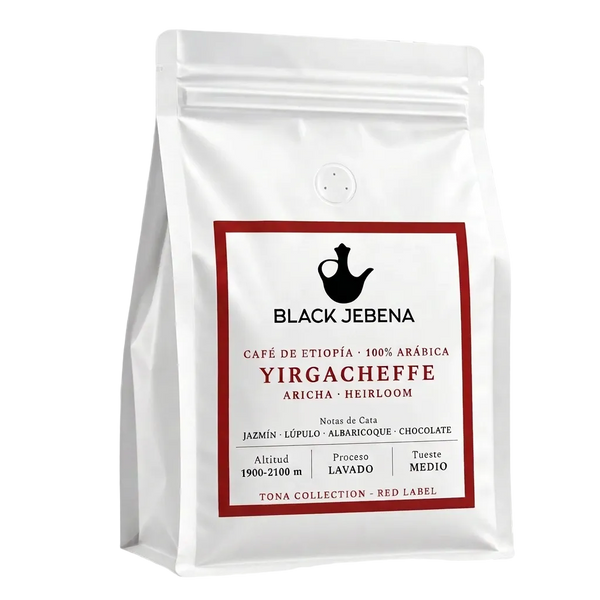
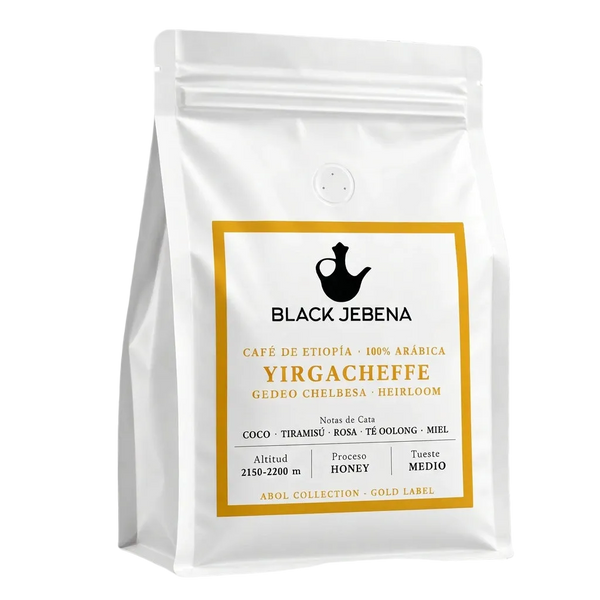
Yirgacheffe is a small district in the Gedeo zone of southern Ethiopia, and also the name under which almost all the coffee from that zone is sold. It is grown in family gardens at high altitude, between 1,700 and 2,200 metres. Washed, it usually gives a floral, citrusy cup with a light body and hints of jasmine, bergamot and tea. Natural is sweeter and fruitier.
But “Yirgacheffe” is only the starting point: the cup changes a lot depending on the community, the altitude and the process.
Zone: Gedeo, South Ethiopia Regional State
Altitude: 1,700 – 2,200 m
Farming: Shaded family gardens
Processes: Washed, natural and honey
Harvest: October – January
Typical profile: Floral, citrus, tea
What exactly is Yirgacheffe?
Yirgachefe is one of the districts (woredas) of the Gedeo zone, whose capital is Dilla. Gedeo is a small zone of about 1,211 km², dropping from almost 3,000 metres down to 1,268 metres at Lake Abaya. Since August 2023 it has belonged to the South Ethiopia Regional State.
As a trade origin, “Yirgacheffe” covers more than the district: it is used for coffee from the whole Gedeo zone (Yirgachefe, Kochere, Gedeb, Wenago, Dila Zuria and Bule) and from a small part of western Guji. Ethiopia registered the name as a trademark, together with Sidamo and Harrar, to protect its value on the international market.
Landscape and farming
Yirgacheffe coffee does not come from large plantations. It grows in family gardens, in the shade of trees and mixed with other crops, above all enset, the “false banana” that is the staple food of the area. This agroforestry system of the Gedeo people is so unique that UNESCO inscribed it as a World Heritage Site in 2023: the Gedeo Cultural Landscape.
Farms are usually smaller than half a hectare. That is why the coffee of hundreds of families is brought together at a washing station, which gives the lot its name. When you buy a Yirgacheffe “Aricha” or “Chelbesa”, the name is that of the community and its station.
How it tastes by process
Washed. The classic profile: floral (jasmine, orange blossom), citrus (lemon, bergamot), light body and a tea-like finish. The cherry is pulped, fermented in tanks for 36 to 76 hours depending on heat and altitude, and dried on raised beds for 12 to 15 days.
Natural. The whole cherry is dried in the sun on raised beds. The cup gains sweetness, fruit (blueberry, apricot, strawberry) and a bit more body, without losing its floral background.
Honey. Less common in Ethiopia. The skin is removed but part of the mucilage is left on during drying. It makes very sweet, rounded cups, halfway between washed and natural.
Not all Yirgacheffe is the same
Within the same name, every community has its own character. These are some of the best known:
- Aricha (Yirgachefe): juicy tropical fruit with floral sweetness.
- Idido (Yirgachefe): lots from high-altitude growers, very aromatic.
- Kochere: between 1,800 and 2,100 metres; brighter and more acidic, with notes of fruity tea, citrus and stone fruit.
- Chelbesa (Gedeb): at 2,150–2,200 metres; washed, it recalls apricot and is creamy.
- Konga: peach and apricot with lively citrus.
- Chelchele: caramel or toffee sweetness, almond, floral and citrus.
Altitude also matters: in general, coffees from the highest areas are more floral and those from lower areas more herbal. It is a tendency, not a rule.
How it differs from Sidama and Guji
Compared with Sidama. For years Yirgacheffe was classified as part of Sidamo, and it was separated because of its reputation and price. Sidama is a much larger and more varied region, with coffees ranging from citrus and floral to sweeter, rounder profiles.
Compared with Guji. Yirgacheffe is usually lighter, with finer, more citric acidity. Guji tends to have more body, softer acidity and more pronounced stone fruit. The border is not always clean: for years Guji coffee was sold as Yirgacheffe because of its higher price.
Varieties: what lies behind “heirloom”
Almost all lots are labelled “Ethiopian Heirloom”, but this is not a variety: it is a generic label for Ethiopia’s huge mosaic of local coffee plants. In Gedeo, the most cited local varieties are Kurume, a small-bean variety very common in Kochere, and Wolisho. They are joined by selections from the Jimma Agricultural Research Center (JARC), chosen for their quality and disease resistance.
How to brew it
A washed Yirgacheffe shines in filter methods such as the V60 or Chemex, which bring out its floral profile and clean acidity. Naturals and honeys, sweeter and with more body, also work very well in the AeroPress, French press, cold brew or a light-roast espresso. And, of course, in the jebena, the traditional Ethiopian coffee pot.
Frequently asked questions
What does Yirgacheffe mean?
It is the name of a district and its main town in the Gedeo zone of southern Ethiopia. By extension, it is the trade name for coffee from the whole zone.
What does Yirgacheffe coffee taste like?
Washed, it is usually floral, citrusy and light, with a tea-like finish. Natural, it is sweeter and fruitier. Each community and each process gives different nuances.
Are Yirgacheffe and Sidamo the same?
No. Yirgacheffe used to be included in Sidamo, but today they are different origins. Gedeo, where Yirgacheffe lies, belongs to the South Ethiopia Regional State; Sidama has been a region in its own right since 2020.
Is washed or natural better?
It depends on what you are looking for. Washed is cleaner, more floral and lighter. Natural is sweeter, fruitier and fuller-bodied. If you like elegant filter coffee, start with a washed one; if you prefer something more indulgent, with a natural.
Which brewer suits it best?
Washed coffees shine above all in filter (V60, Chemex). Naturals and honeys also work in the AeroPress, French press, cold brew, espresso and jebena.
What is “heirloom” coffee?
It is a trade label that groups Ethiopia’s local varieties. It is not a specific variety: behind it are varieties such as Kurume or Wolisho and JARC selections.
Sources
- Wikipedia: Gedeo Zone
- Wikipedia: Yirgachefe (woreda)
- Wikipedia: South Ethiopia Regional State
- Algrano: Labelling Yirgacheffe coffee
- Cafe Imports: Origins, Ethiopia
- Ally Coffee: Ethiopia’s Coffee Regions
- Collaborative Coffee Source: Kochere
- WIPO: Ethiopia and the Starbucks Story
- Sucafina: variety glossary