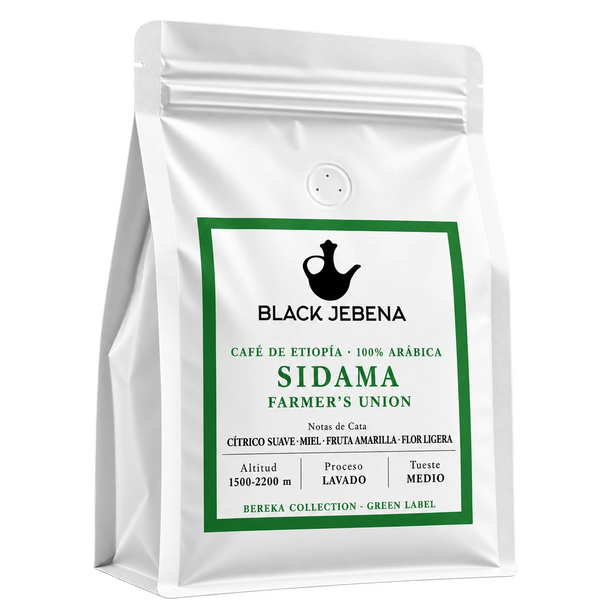
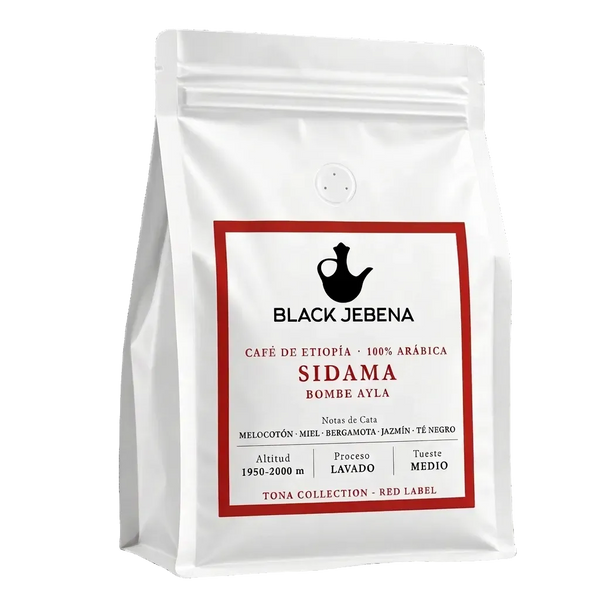
Sidama is the great coffee region of southern Ethiopia and, under the name “Sidamo”, one of the best-known origins in the world. It stretches from the shores of Lake Hawassa to highlands above 2,000 metres, which is why it produces very different coffees: clean, citrusy, floral washed coffees and naturals with red fruit and chocolate.
Some of the country’s most awarded lots come from its highlands, such as Bensa.
Zone: Sidama Region (since 2020)
Altitude: 1,500 – 2,300 m
Farming: Gardens and semi-forest
Processes: Washed, natural and anaerobic
Harvest: November – January
Typical profile: Citrus, floral, stone fruit
Sidama or Sidamo: what exactly is it?
Sidama is the name of the people and the territory; Sidamo is the trade name under which its coffee has been sold for decades. Since 18 June 2020, after a referendum, Sidama has been a regional state in its own right, with its capital in Hawassa. Before that it was a zone of the former Southern region (SNNPR), and many coffee labels still say so.
“Sidamo” is one of the three trademarks Ethiopia registered for its coffee, together with Yirgacheffe and Harrar. It is not a protected designation of origin. For years, the commercial “Sidamo” also included coffees that are now sold separately, such as those from Guji.
Landscape and farming
More than half of the territory lies between 1,500 and 2,500 metres, in the temperate climate Ethiopians call woinadega. Coffee is grown by smallholders in gardens and semi-forest, in the shade and alongside other crops, and they sell the cherry to private washing stations or to cooperatives such as the Sidama Coffee Farmers Cooperative Union.
Plots are usually between 2 and 5 hectares. As in Yirgacheffe, the coffee of many families is brought together at the washing station, which gives the lot its name.
How it tastes by process
Washed. Delicate and citrusy, with stone fruit, honey and flowers. It is fermented in tanks and dried on raised beds for 10 to 12 days. Some stations dry it under covers to protect it from the rain.
Natural. Red berries (strawberry, blackberry), rose and chocolate, with a full body. The whole cherry is dried in the sun for longer than washed coffee.
Anaerobic. A more experimental process: the cherry ferments in sealed containers, without oxygen, before drying. It gives notes of tropical fruit, caramel and a winey touch.
The best-known areas
- Bensa: the heart of Sidama’s specialty coffee, with stations such as Shantawene, Bombe, Hamasho and Keramo. Several of its lots have ranked among the best in Ethiopia’s Cup of Excellence.
- Shantawene (Bensa): between 1,900 and 2,100 metres; its naturals give strawberry, blackberry, rose and chocolate.
- Bombe (Bensa): above 2,000 metres; very refined washed and natural coffees. It is the origin of our Bombe Ayla.
- Arbegona, Chire and Aroresa: highland areas next to Bensa, with specialty exporters’ stations.
- Aleta Wondo, Dale and Shebedino: historic areas of classic washed Sidamo.
With a territory ranging from 500 to 3,500 metres, Sidama has everything: from everyday coffees to competition micro-lots. Altitude and the station matter as much as the name.
How it differs from Yirgacheffe and Guji
Compared with Yirgacheffe. Sidama is much larger and more varied. Washed coffees from the highlands, such as Bensa or Bombe, come close to Yirgacheffe’s finesse; those from lower areas tend to be rounder and sweeter.
Compared with Guji. High-altitude washed coffees are very similar. Guji is better known for its naturals, with more fruit and more body.
Varieties
As in the rest of Ethiopia, lots are usually labelled “heirloom”, but there are specific varieties behind them. In Bensa, the local variety Kurume and selections from the Jimma Agricultural Research Center (JARC), such as 74158, are declared. The local variety Wolisho is also common in Sidama. Our Bombe Ayla, for example, declares 74110 and 74158.
How to brew it
A washed Sidama shines in filter (V60, Chemex, Kalita) or AeroPress, and also works as a light-roast espresso. Naturals, sweeter and fuller-bodied, hold up well in the French press, moka pot, espresso and with milk. And in the jebena, of course.
Frequently asked questions
Are Sidama and Sidamo the same?
Yes and no. Sidama is the name of the people and the region; Sidamo is the trade name under which its coffee is exported, registered as a trademark by Ethiopia.
What does Sidama coffee taste like?
Washed, it is usually clean, citrusy and floral, with stone fruit and honey. Natural, it gives red berries, chocolate and more body. It depends a lot on altitude and the washing station.
What is the difference between Sidama and Yirgacheffe?
Yirgacheffe is a small, well-defined zone known for its light, floral washed coffees. Sidama is much larger and more varied. For years, Yirgacheffe was sold as part of commercial Sidamo.
What is Bensa?
A highland district of Sidama with many specialty washing stations. If you see “Bensa”, “Bombe” or “Shantawene” on a bag, the coffee comes from there.
Which varieties are grown in Sidama?
Local varieties such as Kurume and Wolisho, and JARC selections such as 74110, 74112 and 74158.
Which brewer suits it best?
Washed coffees, filter or AeroPress. Naturals also work in the French press, moka pot, espresso and jebena.